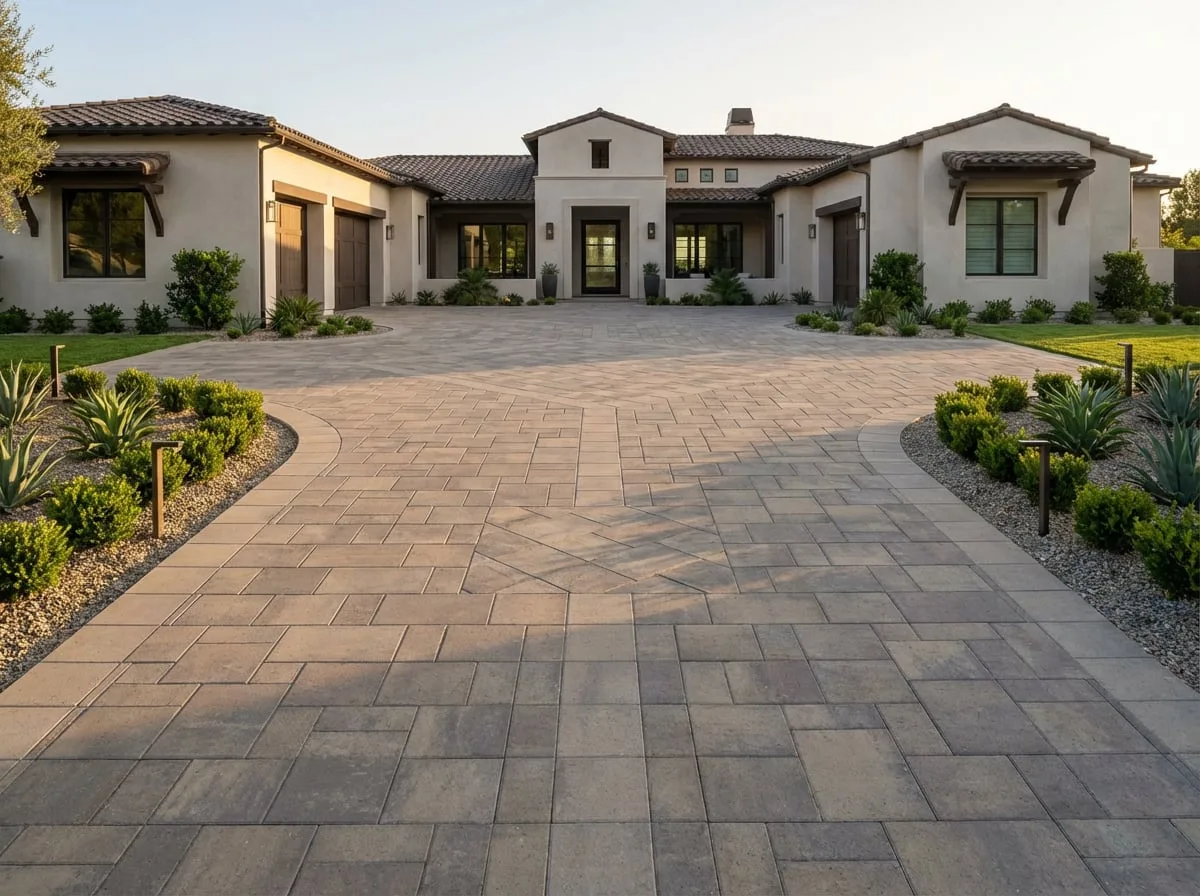
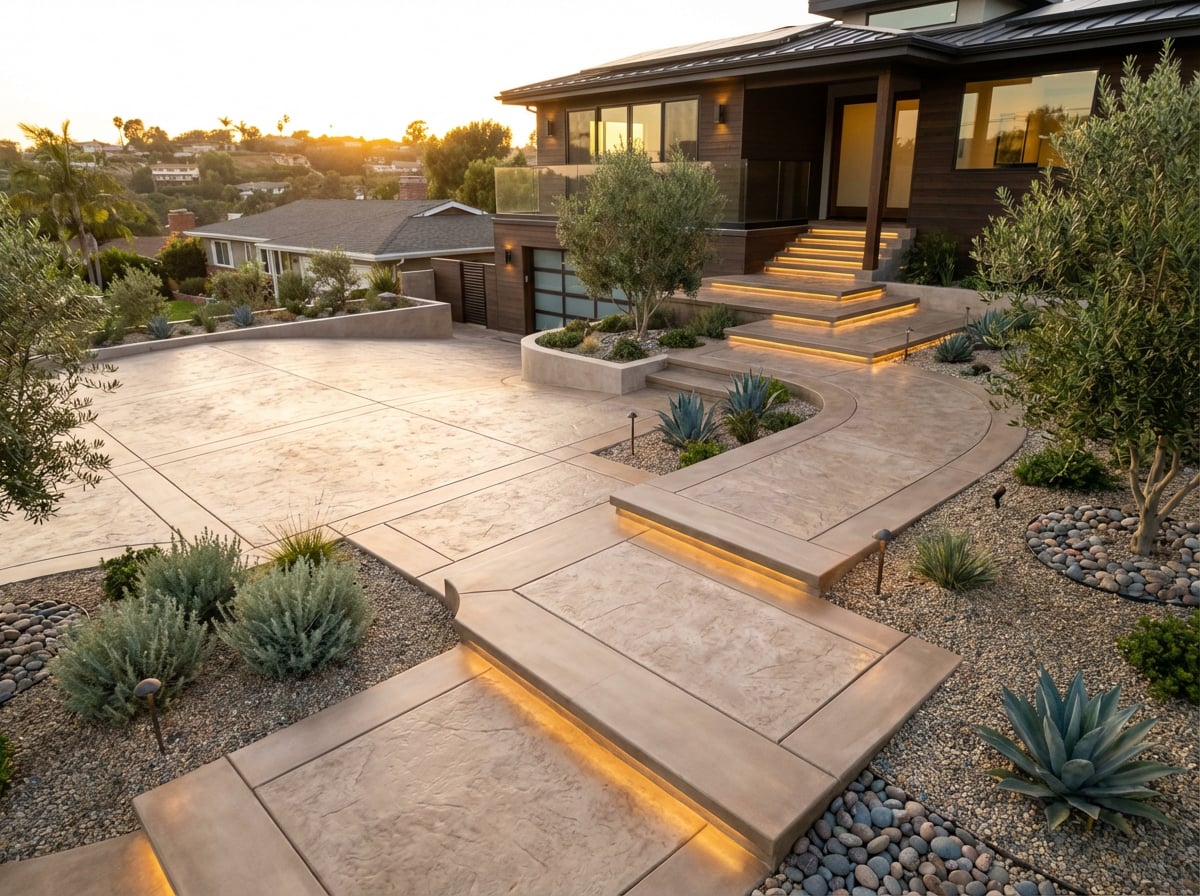
The wall is the reason the patio lasts
Most of the outdoor rooms you admire in San Diego begin with a wall you were never meant to notice. The hillside lot, the cut-and-fill pad, the level terrace carved out of a grade that was anything but — the patio and the kitchen and the pergola sit on top of that quiet piece of engineering, and how long they last has almost nothing to do with the paver color and almost everything to do with what is buried behind the wall.
When a retaining wall fails, it fails in ways the homeowner reads as aesthetic and the builder reads as structural. A subtle lean the first winter. A bulge at mid-height the second. Efflorescence weeping through the face. A hairline at the cap that the drip irrigation slowly widens. By year seven, the patio above has moved with it — joints open, a step rocks, the barbecue island has a crack the mason cannot hide. The wall was not the problem. The wall was the symptom. The footing was wrong, or the drainage was missing, or the geogrid was value-engineered out of the submittal, and the whole assembly has been telling the truth ever since.
A wall built correctly disappears into the landscape and stays there for thirty years. The face you choose is the part you live with in the photograph. The footing, the base, the geogrid laid course by course into the soil behind, the perforated drain and the filter fabric — that is the part you live with every February when the rain comes down for three days and the neighbor’s wall is the one that weeps.
This is the service where the visible inch is a small part of the work.
What our wall work includes
Every wall is engineered to its job. We do not run one detail across every property and hope.
- Segmental retaining walls (SRW block) — dry-stack block systems from the major manufacturers, set over an engineered base with geogrid reinforcement where height and surcharge demand it. Fast to build, clean to detail, and honest value in the two-to-six-foot range.
- Poured concrete with stone or tile veneer. A reinforced concrete stem wall on a structural footing, faced with cut natural stone, manufactured stone veneer, or porcelain tile. The right answer where the face has to match an architectural element on the house.
- Natural-stone walls — dry-stack fieldstone and mortared ashlar work, hand-set by a mason. Slower, more expensive, and the only wall that reads as inevitable on certain properties.
- Boulder walls for the informal grade and transitional zones where a quarry-faced stone reads correctly and a block wall would not.
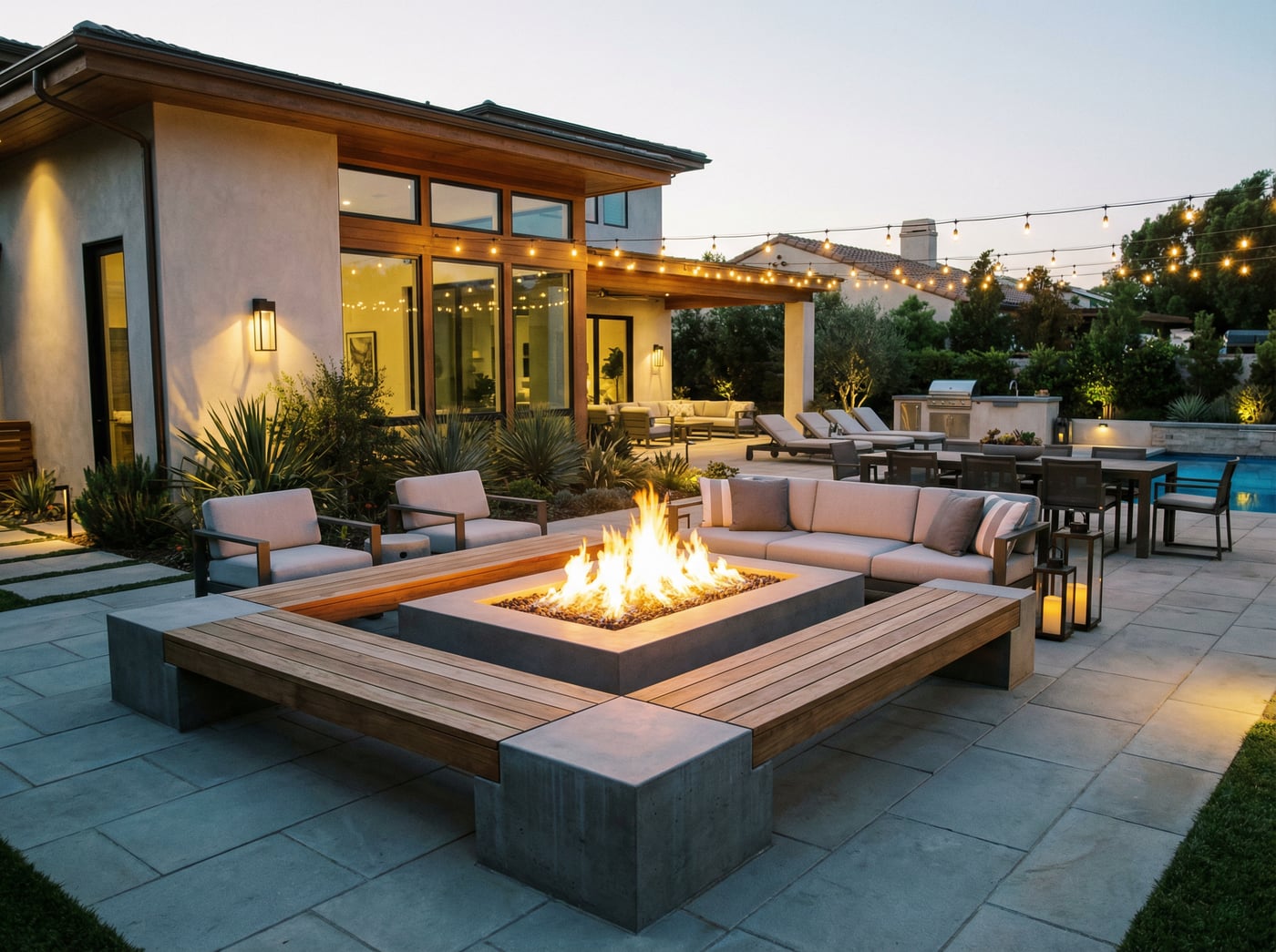
- Seating walls and integrated bench systems — lower, non-structural walls that shape a patio, carry cushions, hide a planter edge, or flank a fire feature. Often built as a cap on a short retaining run, so the same wall does two jobs.
Structural and non-structural walls are different animals. A structural wall holds soil and carries a calculated load; a seating wall holds people and a throw pillow. We build both, and we will tell you plainly which one your project needs. Walls almost always coordinate with other scope — see our drainage and grading, patios and hardscape, and pool decks work.
Our process
We build every wall through the same sequence. It is the reason they hold their line.
The first conversation. Thirty minutes on the phone or on the property. You walk us through what you are trying to accomplish — a level terrace, a cut into a slope, a courtyard, a seat. We tell you, honestly, whether the wall you are picturing is the wall the site needs, or whether you are describing a different problem with a wall-shaped answer.
Site visit, topographic survey, and soil assessment. Both founders walk the property. We measure elevations, flag existing drainage, note the soil you are working with — expansive clay, decomposed granite, loose fill from an older grading job, rock you will hit with the excavator — and we note where the water wants to go when it rains. The wall design starts here, not at the face.
Engineered drawings where the wall triggers them. In San Diego County, a retaining wall generally requires engineering and a permit once the exposed face exceeds three to four feet, with a lower trigger when there is a surcharge above (a patio, a pool, a driveway). We coordinate stamped engineering when the job calls for it, submit through the appropriate jurisdiction — see the San Diego County permit portal — and build to the drawings that come back approved.
Footing excavation and base preparation. A wall is only as honest as what it sits on. We over-excavate, compact in lifts, and place the correct base material for the system — crushed aggregate base under SRW, an engineered concrete footing under a poured wall. Cheat the base and the wall is already telling on you by the second winter.
Geogrid reinforcement in the soil behind the wall. For SRW walls of any real height, geogrid is what turns a stacked-block face into a reinforced soil mass. The grid lays into the backfill course by course, extending several feet behind the wall, tying the soil to the face so the assembly moves as one. It is inside the hill and you will never see it. It is also the single most value-engineered-out element in budget jobs, and the single most common reason cheap walls bulge.
Drainage layer. Clean aggregate behind the wall, a perforated pipe at the base sleeved in filter fabric, and a daylight point where the water actually leaves. San Diego gets eighty percent of its rain in a handful of storms — the wall that is never going to have a drainage problem is the one where we built the drainage assuming it would.
Block or stone setting, then the cap detail. Course by course, checking plumb and line every few feet. Cap blocks or cut stone set in adhesive or mortar, with a shadow line, bullnose, or flush detail to match the face. The cap is small. It is also the first thing the eye catches, and the first thing a failing wall loses.
Backfill, compaction, and integration with the hardscape above. Backfill in lifts, compact honestly, and tie the grade into whatever the wall is holding back — a patio, a planting bed, a driveway edge, a pool deck. Details done now disappear into the finish. Details skipped now reappear in six months as a dip along the edge.
The 10-Month Walk-Through. Ten months after completion, we come back. Walls are the scope where this program earns its keep — a winter of real rain, a summer of expansive-soil movement, and the wall has had the time to tell us the truth about itself. Anything the seasons have exposed gets handled. No invoice.
Materials and the brands we install
The material in the face of the wall is a decision; the material behind the wall is a commitment. We build both with care.
On the SRW side, we install Belgard (Celtik Wall, Anchor Diamond, and the heavier Anchor Vertica where the height and face demand it), Techo-Bloc (Mini-Creta, Borealis, Rocka, and the deep-face Semma where the budget supports it), and Allan Block systems where the classic textured face reads correctly on the property. Each line behaves differently — pinned, lipped, or gravity-set — and we detail to the manufacturer’s spec because that is what keeps the engineering warranty meaningful.
For natural-stone walls we work in San Diego and Sonoma fieldstone (dry-stack and mortared), flagstone, and ashlar-cut limestone for the formal lines that some properties call for. On poured concrete walls, we face in Eldorado Stone veneer, cut natural stone, or porcelain tile — selected to carry a material line from the house through the yard rather than introduce a new one.
Boulder walls are their own language. On the right property, a hand-placed boulder wall reads as though the grade was always there.
A specialty materials background Mike also operates on the stone and tile side gives us direct supplier access, a deeper bench on the face detail, and installation discipline on the masonry work that most outdoor-remodel firms are not set up to carry.
Investment and what drives the number
Wall work with San Diego Landscape Remodeling runs between $20,000 and $100,000 for the large majority of our projects, with scopes above that range when height, engineering, or facing material push the job into another category.
Twenty thousand dollars buys a well-built seating wall or a modest SRW run under two feet — short, un-engineered, capped honestly, and integrated into the hardscape around it. Forty to sixty thousand covers a longer structural wall at the typical hillside-lot scale, with the engineered footing, geogrid backfill, drainage assembly, and full cap detail intact. Eighty thousand and up is where tall walls, stamped engineering, heavy excavation, premium natural-stone face, or tiered construction live.
Cost drivers you should understand before the first conversation:
- Wall height. Every foot of exposed face increases load and cost, and once the wall passes the permit threshold the engineering and review fees enter the number.
- Linear feet. Longer walls amortize setup but not material.
- Facing material. SRW block is the most honest value. Poured concrete with veneer is a step up. Hand-set natural stone is the top of the range and the longest on the calendar.
- Soil conditions. Expansive clay changes the footing; loose fill from an older grading job changes the base prep; rock changes the excavator day-rate.
- Drainage complexity. A wall with a clear daylight point is a different number than a wall that needs a drain line routed two hundred feet to a legal outlet.
- Geogrid reinforcement requirement. Height and surcharge decide this, not budget.
- Site access. A wall we can reach with a skid-steer and a delivery truck is a different job than one where block moves by wheelbarrow down a side yard.
- Tier vs. single wall. Two shorter terraced walls often read better and sometimes cost less than one tall one — and sometimes the opposite is true.
- Cap detail. A simple cap block and a cut-stone cap with a shadow reveal are not the same piece of work.
- Integration with patio or pool. A wall that terminates cleanly into a patio or a pool deck is planned that way from day one, not discovered on site.
Premium fair value, quietly engineered. That is the product.
Where we work
We build walls across San Diego County, with a natural concentration in the hillside submarkets where retained grade is simply how the neighborhood was built. Mount Helix and the surrounding East County hillsides, the canyon-edge properties of Mission Hills, and the rolling inland lots of Poway and its neighbors see more wall work than almost anywhere else on our schedule. Coastal properties in Del Mar, La Jolla, and Encinitas bring their own coastal-overlay and view-corridor rules; inland-hillside work in Rancho Santa Fe, Fairbanks Ranch, and Santaluz brings soil and surcharge considerations that belong on the drawing before the excavator arrives.
Frequently asked
Do retaining walls need an engineer?
Sometimes. Short non-structural walls and seating walls generally do not. Any wall retaining real soil height, any wall with a surcharge above (a patio, a pool, a driveway, a structure), and any wall above the jurisdictional height threshold does. We err toward engineering on marginal calls. The stamped drawing is a small cost compared to rebuilding the wall.
When does a wall require a permit?
In San Diego County and most of its cities, a retaining wall generally triggers a permit once the exposed face exceeds three to four feet, with lower triggers where a surcharge is present. Coastal overlays, hillside overlays, and certain HOAs add their own review. We confirm the specific threshold with your jurisdiction — start with the San Diego County permit portal — and handle the submission as part of our scope.
What fails first on a poorly built wall?
The drainage. Almost every wall failure we are called out to inspect comes back to water that was never given a path out. Hydrostatic pressure builds behind the face, the wall begins to lean or bulge, efflorescence weeps through the joints, and eventually the soil itself moves. A properly detailed drainage layer — aggregate, perforated pipe in fabric, daylight — is cheap insurance on a wall meant to last thirty years.
Can a seating wall be integrated with a retaining wall?
Yes, and it is often the right answer. A short retaining run at patio height becomes the seat that edges the patio — one wall, two jobs, one coordinated detail. We plan it that way from the drawing, not as an add-on once the patio is poured.
SRW block vs. poured concrete vs. natural stone — which is right?
SRW block is the best value for most hillside-lot structural work between two and six feet — engineered, fast, clean. Poured concrete with veneer is the right answer when the face has to carry a specific material line from the house. Hand-set natural stone is the top of the range for properties and programs where the wall needs to read as inevitable rather than installed. We will tell you which one the site is asking for.
How important is the drainage behind the wall?
It is the difference between a wall that lasts and a wall that does not. There is no retrofit for bad drainage once the wall is backfilled — you rebuild from the footing up. This is the single detail we refuse to value-engineer out.
How long will it last?
A properly engineered and properly drained wall should serve thirty years or more at its original alignment, with minor cosmetic maintenance on the cap and face. A wall built without the engineering or the drainage starts telling on itself inside seven to ten. The face material matters less to lifespan than the assembly behind it.
What warranty comes with the work?
We warranty our workmanship for a minimum of one year, with manufacturer warranties on SRW systems extending longer when we install to specification. The 10-Month Walk-Through Program matters most on wall work: ten months after completion, through a winter of real rain and a summer of soil movement, we return and walk every foot of the wall with you. Anything the seasons have exposed gets handled on our dime. Walls are especially honest over winter rains, and this program is how we keep ours that way.
Who do we actually talk to during the project?
Gio or Mike. Every wall project is personally run by one of the founders — no account managers, no handoffs. You have both cell phones from the first conversation, and our Field Lead runs the day-to-day on the ground. This is Direct-Founder Access, and it is part of the product. You can verify Mike’s active Class B general contractor standing through the CSLB license lookup.
Can we see one in person?
References available on request. During discovery, we are glad to take you past completed wall work so you can read the face, the cap, and the grade in context — the way the wall sits in the landscape, not the way it photographs. At launch we do not publish client testimonials; the old-fashioned walk-past is a better way to vet this kind of work anyway.
References available on request
We do not publish testimonials. When a project is complete, we introduce future clients to the homeowners who live with the finished work, and during discovery we will walk you past completed walls in the neighborhoods where they sit. On wall work especially, seeing the face and the grade in person is worth more than any quote.
When you are ready
If you are planning a patio, a terrace, a courtyard, or a full remodel and you already know there is a wall in the scope — or you are not sure yet whether there is one — we would like to hear about the property. A first conversation is thirty minutes, by phone or on the yard, and there is no cost to begin. We will listen, we will tell you what we see in the grade, and we will tell you honestly whether we are the right team for the work.
Licensed and insured general contractor, operating under Mike’s Class B license. CSLB #1139785.