
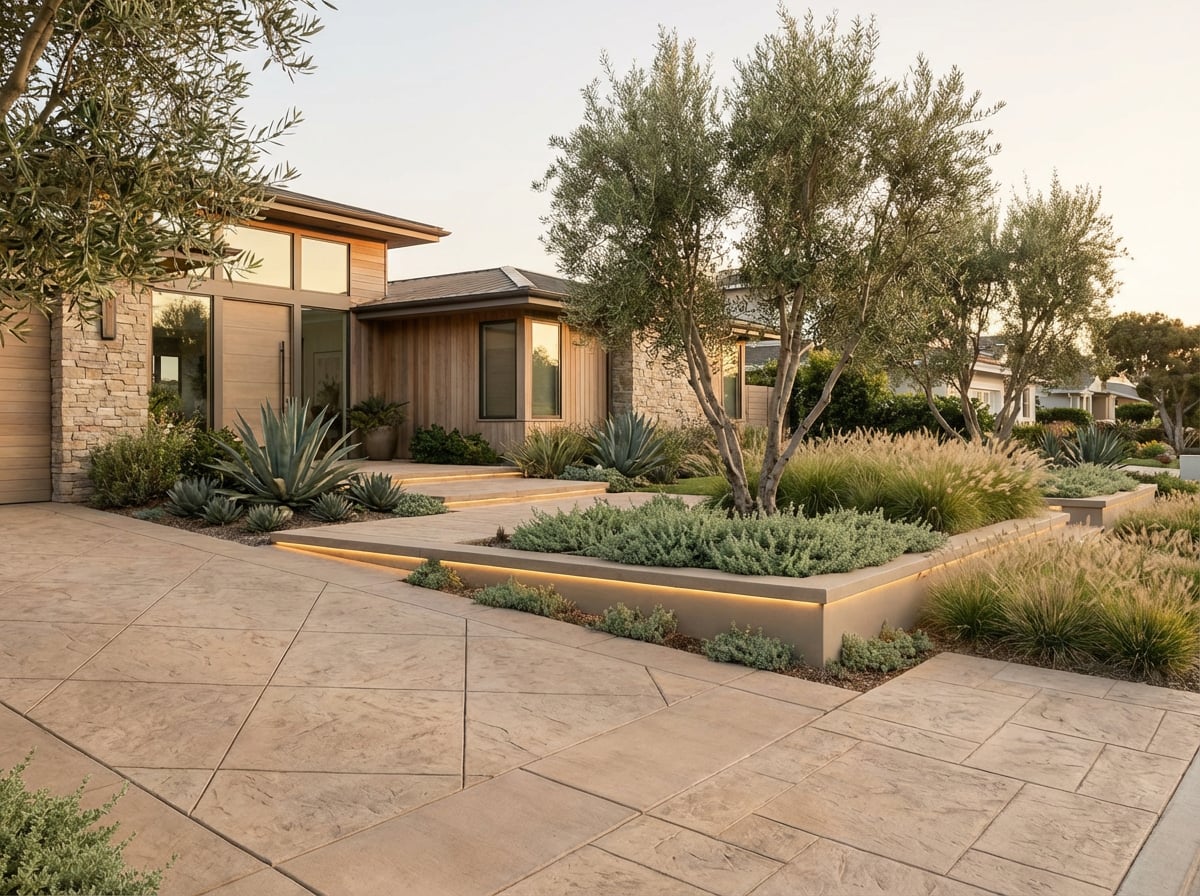
The City in the Country, as it actually lives
A Poway property reveals itself slowly. You turn off Espola or Twin Peaks, the road narrows, the houses pull back from the street, and the oaks take over the skyline. A neighbor rides past on horseback at a walk. Somebody’s golden retriever is lying in the shade of a split-rail fence that has been there longer than the kids who painted it. On Sunday morning the parking lot at Lake Poway fills with families carrying folding chairs and fishing poles, and by noon the trail to Mount Woodson is a quiet line of hikers walking single-file toward the boulder at the top.
This is the City in the Country, and the phrase is not marketing. It is a rule Poway wrote into its own general plan and has kept, decade after decade, while the freeways around it filled in and the tract homes multiplied on every other ridge in North County Inland. The result is a community where acreage is normal, where the horse fence outnumbers the privacy wall, and where the kids who grew up riding Pomerado Road on their bikes now bring their own children to the same July 4th fireworks over the lake.
The homeowner here is usually not new. The house has been in the family for fifteen or twenty-five years, or it is a second home the owner chose deliberately over a coastal tract, or it is the one they finally bought after their kids got into Poway Unified and they decided this is where the next chapter happens. Either way, the yard is the whole point. The yard is the reason they live here.
The property profile
Poway is an incorporated city of roughly fifty thousand residents with its own General Plan, its own Development Services office, and its own way of doing things that does not look like the rest of San Diego County. Lot sizes reflect that. Half-acre parcels are common across most of the older neighborhoods. One- and two-acre lots are the working baseline through Green Valley, Old Coach, Heritage, and the slopes above Poway Road. In the higher-end equestrian enclaves — think the private roads off Espola, the estate corridors around Green Valley Truck Trail, and pockets of Fairbrook — four- and five-acre parcels are not unusual, and some exceed ten.
Equestrian zoning is a defining feature of the city, not a footnote. A large share of Poway is designated or allows for horsekeeping, with setback, drainage, and trail-easement rules that shape where a barn can go, where a pasture drains, and how a future pool deck has to be sited against an existing riding ring. The Poway Trail system threads through private parcels under easement, and an outdoor plan that ignores the easement is an outdoor plan that fails at permit.
The housing stock is a mix. Older custom California ranch homes sit on the land they were sited for, often with original pool decks, aging redwood structures, and mature heritage oaks anchoring the back of the lot. Newer builds — custom, not tract — have shown up in the last fifteen years on infill parcels and rebuilds. And for families, Poway Unified remains one of the real draws. The district’s reputation pulls buyers into the city who could have chosen almost any zip code in the county. When those families move in, the yard is usually the first project.
Soil, slope, and the country climate
Poway soils are inland and mixed. Across most of the city you are working with decomposed granite in the upper horizons and expansive clay below, with weathered bedrock showing up on hillside parcels and, on some ridges, at a shallow enough depth to change how a footing gets designed. Drainage on clay-over-DG behaves differently from sandy coastal soil — water moves slowly, perches above the clay lens, and finds the path of least resistance, which on a sloped lot is usually the neighbor’s property or the city’s flow line.
The climate is real inland. Summer afternoons run hot, winter nights run cold, and the fire season is not a metaphor. Poway sits inside the Cal Fire State Responsibility Area or in the Very High Fire Hazard Severity Zone across wide portions of the city, and defensible space is an enforced code requirement, not a suggestion. Zone 0 — the first five feet around the structure — has reshaped how mulch, planting, and wood structures get detailed near the house. The oak canopies that define the look of Poway come with their own discipline: heritage and protected trees have root-zone rules that limit where you can grade, trench, or place hardscape without an arborist in the scope.
Permits and jurisdiction
Poway is its own permitting authority. Outdoor projects route through the City’s Development Services department, which handles planning, building, and engineering review under the Poway Municipal Code rather than the County code. The city’s Hillside Overlay applies to a meaningful slice of residential parcels and governs grading, retaining, structure placement, and visible building footprint on sloped lots. Tree preservation rules — including protections for heritage oaks and other regulated species — apply across many parcels and can require an arborist report before the first shovel breaks ground.
On the fire side, Poway enforces the California WUI building standards inside the VHFHSZ, which reach into deck framing, eave detailing, and fencing materials within the defensible-space envelope. Equestrian parcels carry their own overlay of setback and drainage rules tied to the horsekeeping use. On the better parcels, a Poway project will touch hillside review, tree review, fire-defensible-space review, and sometimes trail-easement review in the same submittal. We run all of that as scope.
Design character that belongs here
Poway’s architectural vocabulary is quieter than the coast and older than the inland tracts. California Ranch is the anchor — single-story horizontal masses, deep overhangs, board-and-batten or stucco siding, terracotta or standing-seam roofs. Mediterranean and Spanish Colonial show up frequently on the estate parcels, with stucco walls, clay tile, wrought iron, and interior courtyards oriented to the oaks. The newer contemporary ranch is its own idiom — simpler forms, larger glass, flat roofs in places — but when it is done well it still reads as belonging to the hillside.
Material palettes lean natural. Dry-stacked stone and boulder walls that look like they came out of the ground on the parcel itself. Cedar, clear vertical grain, in ceilings and shade structures. Standing-seam metal on pergolas and cabanas where the line wants to be architectural rather than rustic. Stucco that sits quietly against the light. Ipe and Accoya decks on the estate projects that need the geometry to hold for thirty years.
The wrong note is loud. A suburban-tract paver field in a herringbone stamp, a white vinyl pergola, a glossy composite deck — all of these read as imported from a zip code Poway spent forty years resisting becoming. A country-scale outdoor room belongs on country-scale land, and the finish choices have to respect the scale of the oaks and the slope they grow on.
Where San Diego Landscape Remodeling fits in Poway
Poway is a city, a fire zone, a hillside jurisdiction, and in many cases a tree-protected, easement-burdened parcel all at once. Running that stack is the job. We take Poway’s Development Services process, the Hillside Overlay review, the tree-preservation submittal, and the fire and equestrian overlays as scope — we prepare the package, we respond to the reviewers, we schedule the inspections, and you sign.
Founder access is part of the product. Either Gio or Mike is personally on every Poway project, cell phones shared from the first conversation, no account manager layered in between. Our Field Lead runs the day-to-day on the ground, with twenty-five years of high-end outdoor work behind him, and a single crew finishes what they started.
The 10-Month Walk-Through matters more on Poway parcels than almost anywhere else we work. Large-lot drainage, hillside retaining, and oak-root grading all show their hand after the first real winter — a six-inch storm event on a clay subgrade tells you things an August jobsite never will. Ten months after completion, we return to the property, walk every square foot of our work with you, and address anything the seasons have exposed, on our dime. Almost nobody in this industry does this. That is exactly why we do.
We work across San Diego County by design, not by dispatch. Projects are planned months ahead, scheduled into a deliberate calendar, and executed by one crew from first cut to final clean. If you need someone on your property Thursday, we are not the right firm. If you want the work to hold up the first time a grandchild puts a hand on the wall, we are.
Services we deliver in Poway
Every service below is built under one plan, one crew, one scope of work. Poway projects frequently combine most of them.
- Full backyard remodels — the whole outdoor footprint on one coordinated plan.
- Outdoor kitchens and BBQ islands — built-in grills, full appliance packages, gas and water lines.
- Patios and hardscape design — paver, poured concrete, and hand-set stone.
- Fire pits and fireplaces — masonry builds detailed for VHFHSZ compliance.
- Pergolas and shade structures — engineered cedar, Accoya, and steel.
- Retaining walls and seating walls — for the hillside parcels where the grade does the hard work.
- Artificial turf installation — water-discipline surface for dogs, kids, and play zones.
- Landscape lighting — path, step, wash, and canopy, zoned and wired into the build.
- Pool decks and poolside hardscape — integrated deck, coping, and surround work.
- Drainage and grading — the foundation of every Poway project that lasts.
Neighboring markets: Rancho Bernardo, 4S Ranch, and Mount Helix.
Frequently asked
Does the Hillside Overlay apply to my Poway parcel?
Often, yes — the overlay covers a significant share of residential lots in the city. It governs grading volumes, visible retaining, structure placement, and the footprint you can build on a sloped parcel. We confirm the overlay status at the parcel level during the first site visit and design the outdoor program around the review from the start, rather than submitting and getting sent back.
How do Poway’s tree-preservation rules affect my project?
Heritage oaks and other regulated species carry root-zone protections that limit grading, trenching, and hardscape placement near the trunk and canopy. On parcels with protected trees, we bring a certified arborist into the design phase to scope the critical root zone, recommend any needed tree-protection measures, and prepare the documentation the City will ask for at submittal. The design respects the tree. The tree tends to outlast the project anyway.
Can you accommodate an equestrian parcel — pastures, barns, riding rings, trail easements?
Yes. A meaningful share of our Poway work sits on horsekeeping parcels. Outdoor remodels here have to respect setbacks from stables and pastures, drainage away from corrals, trail-easement alignments, and pedestrian-equestrian crossing points. We design around the horses’ routine rather than asking the horses to work around the project.
What does defensible space actually require on my property?
Cal Fire’s defensible-space guidelines define three zones — Zone 0 (0 to 5 feet from the structure), Zone 1 (5 to 30 feet), and Zone 2 (30 to 100 feet) — with specific rules on combustible material, plant spacing, and maintenance. Inside the VHFHSZ, these are enforced code. Our design picks up the zones explicitly: Zone 0 reads as hardscape and non-combustible detailing, Zone 1 planting is spaced and irrigated, and combustible structures hold the required separations.
How do you handle drainage on a large lot?
Large-lot drainage is a separate engineering exercise from a quarter-acre city yard. We map the existing flow lines, identify where water is perching on clay, and design positive drainage away from the structure, away from neighboring properties, and away from easements — typically with a combination of swales, area drains, French drains, and subsurface conveyance to a discharge point the city will accept. Done right, a Poway yard moves a six-inch storm without incident. Done wrong, you find out the hard way in February.
How does a pool deck integrate with a sloped parcel?
On the Poway hillside parcels, the pool and the deck are a grading problem before they are a finish problem. We coordinate the pool shell elevation, the deck finish plane, the coping line, and the retaining walls that hold the bench above and below the deck — one plan, so the finished space reads as a single intentional terrace rather than three trades patched together. The pool-deck service page covers the detail; on a sloped Poway lot, the real work is upstream.
What does a Poway project actually cost?
Most of our Poway work lands between $50,000 and $300,000, with a meaningful share of the estate-parcel projects running higher once hillside retaining, drainage, structures, and pool-deck integration come into scope. We do not take on small-scope work, we do not price-match, and we do not give start-to-ground-break estimates — the design, review, and procurement window varies with the parcel, the overlays involved, and where your project falls in our calendar. We tell you honestly what that window looks like after the first site visit, not before.
References available on request
We do not publish testimonials. During discovery we are glad to take you past completed projects in person so you can see the work as it lives. When a project is complete, we invite future clients to speak directly with the homeowners who have lived in the finished work. On Poway-scale projects, that conversation is worth more than any quote we could crop onto a page.
When you are ready
If the parcel is serious and the timeline is right, we would like to hear about the property. A first conversation is thirty minutes — by phone, or on your land — and there is no cost to begin. We will listen, we will tell you what we see, and we will tell you honestly whether we are the right firm for the work.
Licensed and insured general contractor, operating under Mike’s Class B license — CSLB #1139785. Verify active standing any time through the CSLB license lookup.