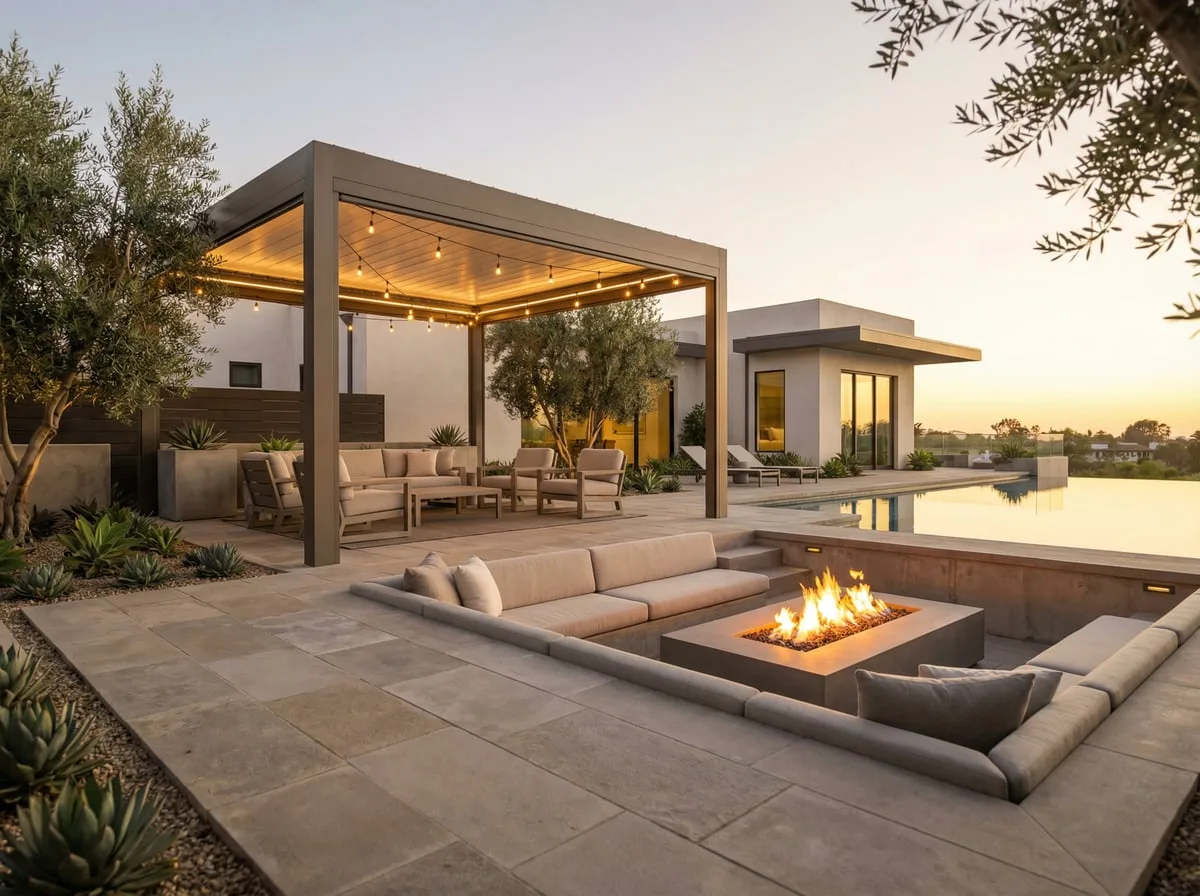
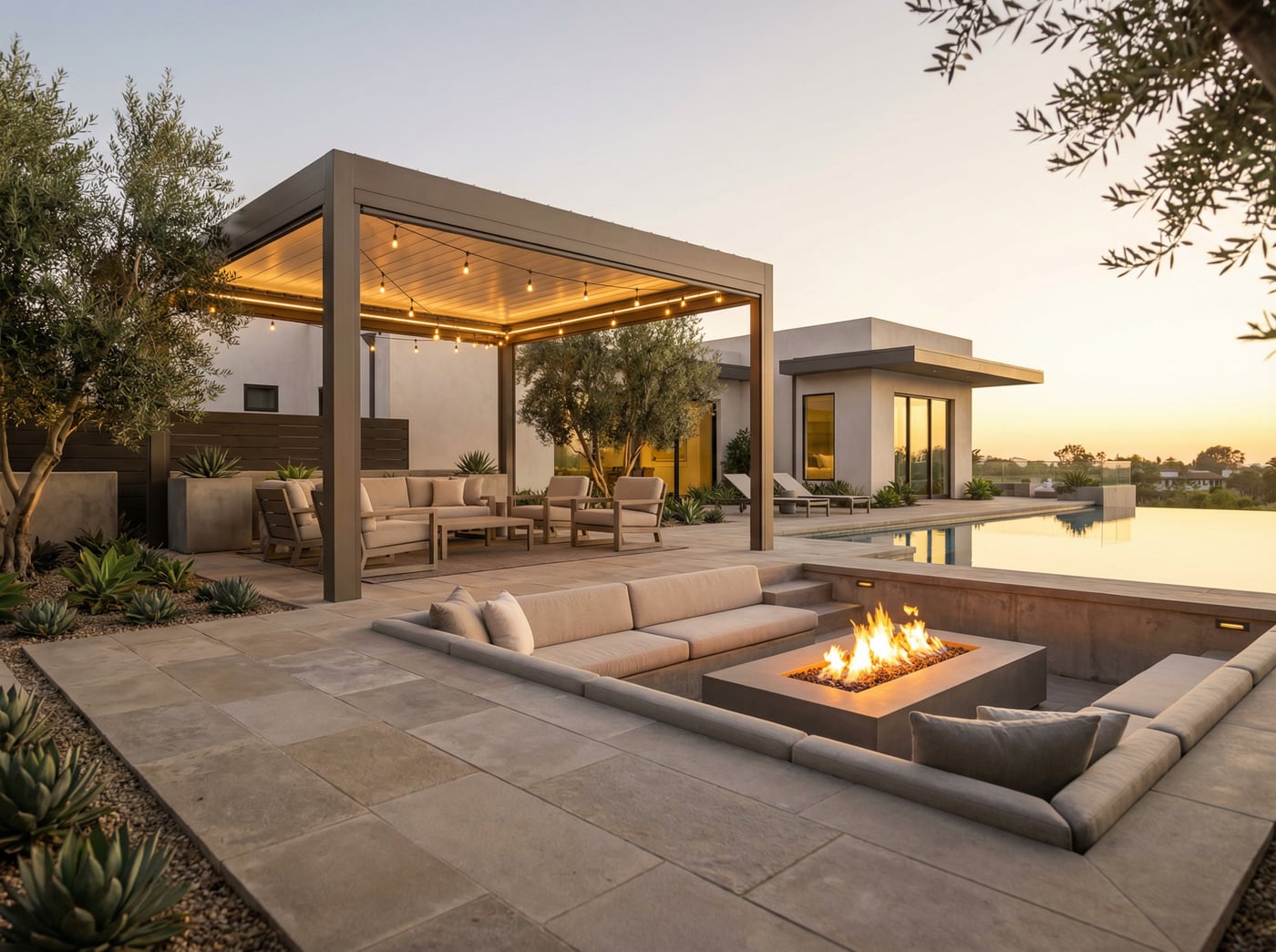
The ceiling that turns a patio into a room
Think about the last time you actually sat outside at your own house. Not a holiday. Not a birthday. A Tuesday in July at 5:40 p.m., when the sun is still high enough to make the flagstone hot and the glass of water sweat in under a minute. Most San Diego patios fail that test. They are beautiful at 7:15 and unusable from noon until the sun clears the fence. The calendar narrows to a dozen evenings a year.
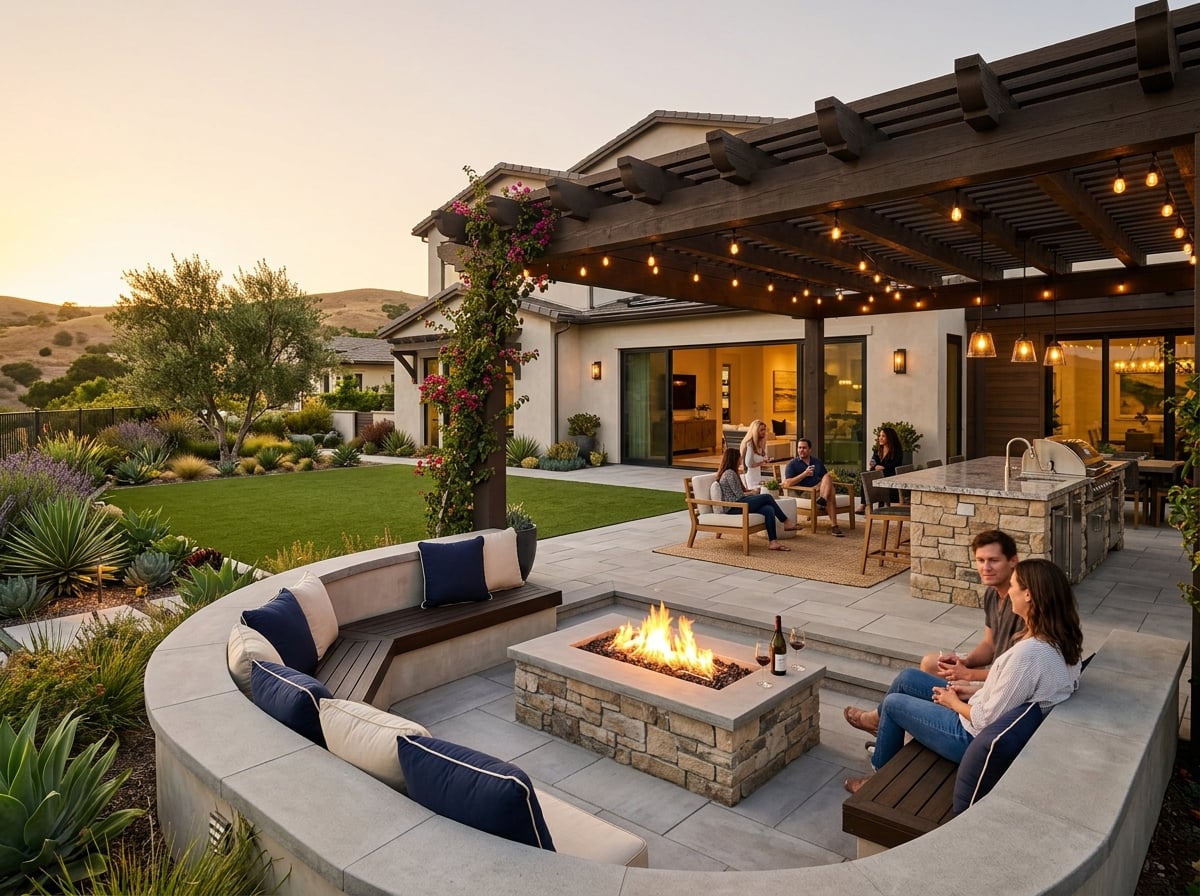
A well-designed pergola is the quiet correction. It is the ceiling a patio needs to become a room — the element that changes how a yard is used more than any paver, any planter, and any appliance under a hood.
The physics are specific to this coast. In July, the sun sits at roughly seventy-two degrees above the horizon at solar noon; in March, it tops out near fifty. That twenty-plus-degree swing changes where shade lands by several feet across a single patio. A structure drawn on a floor plan without a solar study for your actual property can shrink the usable footprint by as much as forty percent in peak summer — the hours you paid for, quietly unavailable.
The difference between a yard you look at and a yard you live in is almost always overhead. Walls are optional. A floor is a given. The ceiling is what tells the body it is allowed to stay.
Built well, a pergola extends the season from a handful of perfect evenings into a default room. You stop asking whether it is too hot to eat outside. You stop waiting for the sun to drop. You walk out after work, sit down, and stay.
What our shade work includes
Pergolas and shade structures are not one product. They are a family of design decisions — material, span, attachment, finish, integration — and the right one depends on the property, the program, and how long you plan to live in the house.
We design, engineer, and build:
- Fixed-timber pergolas in clear vertical-grain Western Red cedar, old-growth redwood where available, and Accoya — a modified-wood specification that holds geometry better than any untreated hardwood in the San Diego climate.
- Steel pergolas for long spans, contemporary architecture, and properties where wind load or view corridors rule out heavier timber framing.
- Motorized louvered-roof systems from StruXure, Equinox, Renson, and Apollo — aluminum pergolas whose blades rotate closed for rain and sun and open for stars.
- Integrated fabric and shade sails for large spans and architectural moments where a solid roof would compete with the house.
- Attached or free-standing configurations — ledgered to the house where code and detailing allow, or set on independent footings where the architecture or the roof line calls for separation.
- Integrated lighting, ceiling fans, and radiant heaters designed into the structure from the first drawing, not mounted afterward.
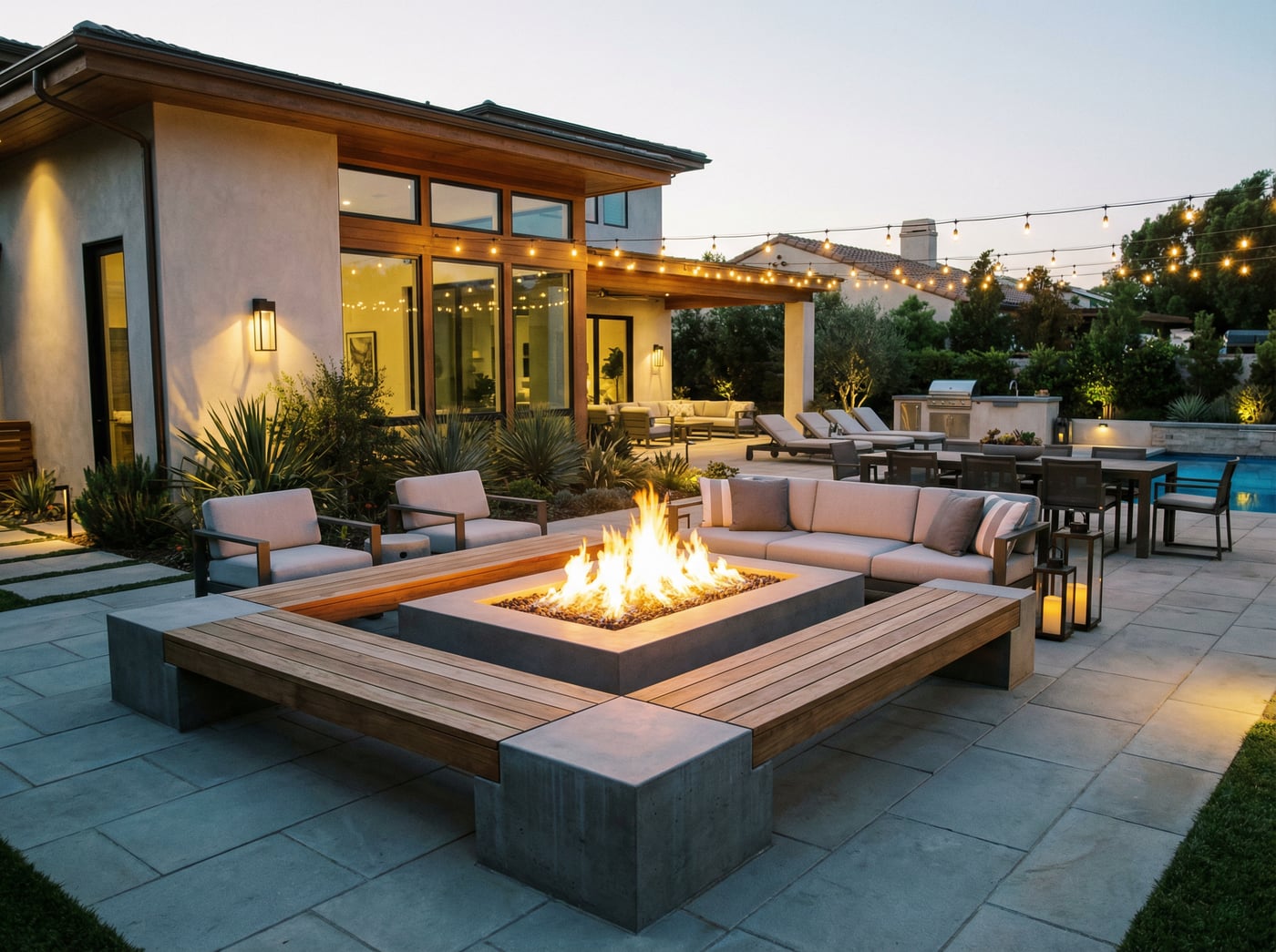
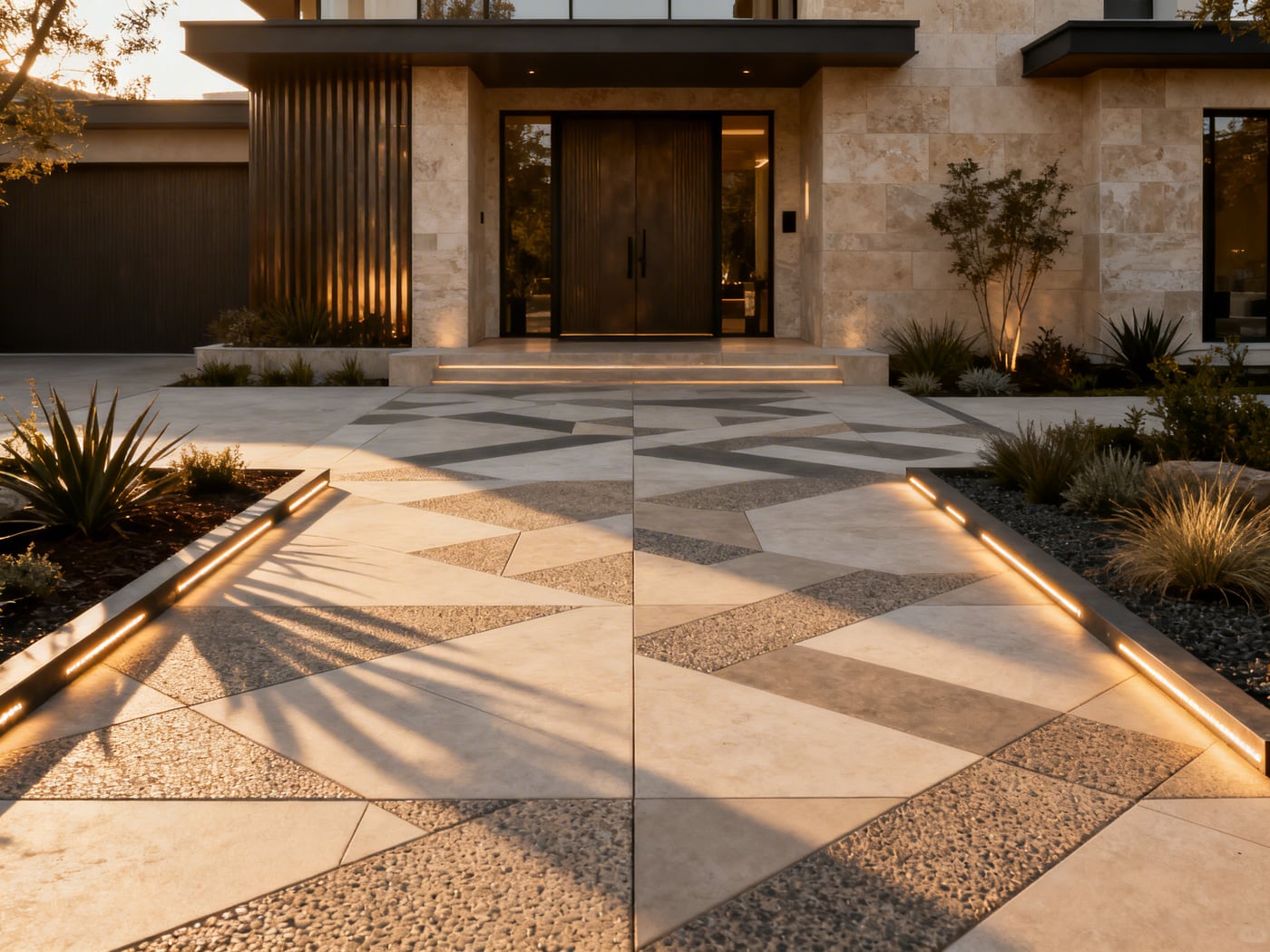
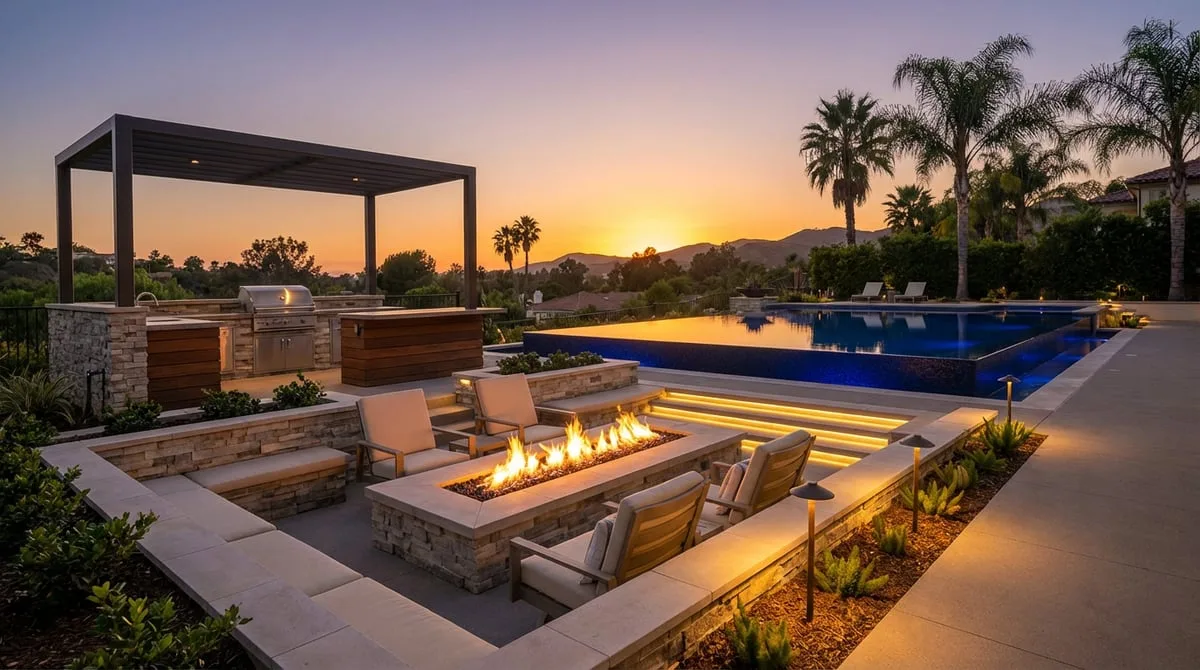
- Coordination with the rest of the outdoor footprint — patios and hardscape underneath, landscape lighting wired through the posts, and an outdoor kitchen that sits under the shade rather than beside it.
A pergola designed as its own object is a thing you bought. A pergola designed with the house, the patio, and the way you actually live is a room.
Our process
Shade structures are drawn before they are framed, and they are studied before they are drawn. We run every pergola through the same sequence.
The first conversation. Thirty minutes by phone or on your property. We ask what you want to be able to do under the structure — morning coffee, weeknight dinners, a hundred people in December — and when, exactly, the current space fails you.
Site visit and solar study. Both founders walk the property. We photograph the constraints, measure the footprint, and study the sun — angle at solar noon in July against angle in March, where the afternoon light comes from, which windows the structure will shade or reveal, where the neighbor’s roof takes over at four. The solar study is the work that tells us whether your structure should be twelve feet deep or eighteen, attached or offset, fixed or louvered.
Wind-load and structural engineering. San Diego coastal and inland wind zones are not the same number. A pergola engineered for Bonita is not engineered for Encinitas or Solana Beach sitting a mile from open ocean. We engineer footing depth and diameter to the soil report and the wind zone — typically twenty-four to forty-eight inches of embedment, sized by load — and we stamp what code requires stamped.
Permit review. Height is the trigger. Most jurisdictions require a permit once a structure passes twelve feet, and attachment to the house almost always adds a review. We read the code before we draw the structure, not after.
Attachment method. Ledger-attached structures share load with the house and read as an extension of the architecture; free-standing structures stand on their own footings and let the house breathe behind them. Each has a right answer, and the answer changes by property.
Material and finish schedule. Wood gets a finish schedule — penetrating oil at install, reapplication on a stated cadence, inspection built into the 10-Month Walk-Through. Aluminum louvered systems ship factory-finished and need almost nothing. We commit in writing to whichever path the project takes.
Build. A single crew, from footing pour to final trim. Our Field Lead runs the day-to-day. Gio or Mike is personally on every project.
The 10-Month Walk-Through. Ten months after completion, we come back — through a wet winter, a hot September, and the first real seasons your structure has lived through — and we walk every joint, fastener, and finish with you. Anything that needs attention gets attention. No invoice.
Materials and the brands we install
Three families of material cover almost every pergola worth building in San Diego. The right choice depends on how the structure reads and how you want to relate to it over the next twenty years.
Clear vertical-grain Western Red cedar is the default for warmth. It takes a penetrating oil beautifully, ages into a quiet silver if you let it, and holds up well in coastal conditions with an honest maintenance schedule. Old-growth redwood, where it can be sourced, has similar character with a deeper color. Accoya is acetylated softwood engineered to hold its geometry in exterior conditions — effectively the premium outdoor-wood specification, priced accordingly, and the right answer when a client wants timber warmth without the movement.
Steel is the answer for long unsupported spans, contemporary architecture, and hillside properties where post count needs to drop. Powder-coated, it needs almost nothing for decades.
Aluminum louvered-roof systems — StruXure, Equinox, Renson, Apollo — are the flexibility answer. Blades rotate closed in rain, open for stars, and tilt to follow the sun. The trade-off is a higher up-front number in exchange for a structure that effectively never asks you to maintain it.
Finish systems on wood matter. Penetrating oils feed the grain and age gracefully; film-forming stains look crisper at install but peel when they fail. We specify the finish to the material and to how you want the structure to look in year ten, not just in week one.
The honest trade-off, stated plainly: louvered aluminum buys flexibility and no finish schedule at a higher up-front cost. Premium wood buys warmth and character at a lower up-front cost plus an honest maintenance commitment. Both are right. The wrong one is the one chosen without understanding the trade.
Investment and what drives the number
A San Diego Landscape Remodeling pergola or shade structure typically runs between $20,000 and $80,000, installed and coordinated with the surrounding work.
At the floor — around $20,000 — a modest free-standing cedar pergola on an existing patio, straightforward footings, no integrated mechanical, is an honest project at an honest price. The $35,000 to $50,000 band is where most of our work sits: a larger timber or steel structure, attached or free-standing, sized for a real dining or lounge program, with conduit roughed in for lighting and fans. At $60,000 to $80,000, you are typically looking at a motorized louvered-roof system over a larger footprint, with integrated radiant heaters, fans, and a designed lighting package — effectively a four-season outdoor room.
Cost drivers you should understand before the first conversation:
- Footprint. Square footage is the largest single lever on material, labor, and footing count.
- Material. Cedar, Accoya, steel, and aluminum louvered systems sit on different price tiers — by significant margins.
- Attachment versus free-standing. Free-standing structures carry more footings and more engineering; attached structures require ledger detailing and sometimes roof modifications.
- Footings. Soil type and wind zone drive depth and diameter. A coastal property an engineer treats as exposed is a different footing schedule than an inland, sheltered lot.
- Height. Most jurisdictions trigger permits above twelve feet, and height also drives wind-load math.
- Integrated mechanicals. Lighting, fans, heaters, and louver motorization all need rough-in, conductors, and low-voltage transformers or line-voltage feeds.
- Finish schedule. Wood structures carry a finish commitment; aluminum does not.
- HOA review. Covenanted communities — Rancho Bernardo, parts of Encinitas, Rancho Santa Fe, and most of the coastal corridor — add review cycles and, occasionally, design revisions.
Premium fair value, delivered with full founder access. That is the product.
Where we work
We design and build pergolas across San Diego County — coastal, inland, hillside, and flat. Coastal properties in Encinitas and Solana Beach carry salt exposure and higher wind zones that change footing depth and material selection. Inland properties in Rancho Bernardo carry hotter afternoons, stricter HOA review, and often larger lots that make free-standing steel and aluminum structures the right answer. Every property gets its own solar study, its own wind-load math, and its own finish schedule. No templates. No catalog installs.
Frequently asked
How do we decide between a louvered pergola and a fixed pergola?
The question is how much you want control. A louvered roof rotates closed for rain, opens for stars, and tilts to follow the sun — the blades do the work. A fixed-timber pergola commits to a single overhead condition, which is often exactly right for a patio that wants filtered light and visible structure. Louvered costs more up front and asks less over time. Fixed costs less and asks for a finish schedule. Both are right, for different houses.
Wood or aluminum — which material should we choose?
Aluminum if you want flexibility with the roof and zero maintenance. Wood if you want warmth, grain, and the way cedar or Accoya reads against a stucco or stone elevation. Aluminum wins on longevity with no effort; wood wins on character if you are honest about the finish schedule. We walk the property, look at the architecture, and recommend — we do not sell one over the other on principle.
Do we need a permit for a pergola?
Usually yes, depending on height and attachment. Most San Diego jurisdictions require a permit once the structure passes twelve feet or attaches to the house. Coastal overlays, hillside overlays, and HOAs add review. We read the code for your specific address before we draw, not after — the San Diego County permit portal is where most of our county filings route.
How much does wind actually matter?
A lot more than most homeowners think. Coastal San Diego sits in a higher wind zone than inland, and a pergola that is engineered for Bonita is under-engineered for a lot a mile from the ocean. Wind load drives footing depth, footing diameter, post dimension, and connection detail. We engineer to the site — not to a stock drawing — and we stamp what code requires.
What is the maintenance schedule for a wood pergola?
Penetrating oil at install, then a re-oil every two to three years in most San Diego exposures — sooner on the coast, longer on sheltered inland lots. We inspect the finish during the 10-Month Walk-Through and flag anything that needs attention ahead of the next cycle. If that maintenance rhythm is not one you want to commit to, aluminum or steel is the honest answer.
Can the pergola attach to the house, or does it have to be free-standing?
Either, and the right answer depends on architecture, roof line, and code. Ledger-attached structures share load with the house and read as continuous with the architecture; free-standing structures carry their own footings and let the house breathe behind them. We detail the attachment for drainage, flashing, and load where that path is chosen — and we walk away from attachment where the house cannot carry it cleanly.
Can you integrate lighting, fans, and heaters into the structure?
Yes, and it is almost always easier when it is designed in from the first drawing. We rough in low-voltage lighting runs, ceiling-fan blocking, and line-voltage heater circuits before the structure is closed up. Done late, these become visible conduit and surface-mounted boxes. Done early, they disappear into the framing. See our landscape lighting scope for how the lighting side is detailed.
What about HOA height limits?
Covenanted communities in San Diego County frequently cap structure height and regulate material, color, and sightlines from the street. We review the CC&Rs for your community, draw to the rule, and present to the architectural committee — or recommend a design approach that avoids the review entirely where it makes sense. Some boards take weeks; a few take months. We plan the schedule around the reality.
What is the workmanship warranty?
We warranty our workmanship for a minimum of one year, with material and system warranties extending longer per manufacturer — StruXure, Equinox, and the wood finish manufacturers each carry their own terms. Beyond that, the 10-Month Walk-Through is the back-end commitment that matters: we return at ten months, walk the structure with you, and handle anything the seasons have exposed on our dime. Mike’s active Class B general contractor standing is verifiable through the CSLB license lookup.
Can we see one installed?
References available on request. During discovery we are glad to take you past completed pergolas and shade structures in person so you can see how the material ages, how the finish is holding, and how the structure actually lives in the yard at a random Thursday at five.
References available on request
We do not publish testimonials. When the work is complete, we invite future clients to speak directly with the homeowners who live under the structure — a real conversation, not a cropped quote. During discovery we will walk you past finished pergolas in the neighborhoods where they sit, so you can see the grain, the finish, the joinery, and the way the shade actually falls. It is the old-fashioned way to vet a builder. On this kind of work, it is still the best.
When you are ready
If the patio is already there and the ceiling is the missing piece — or if the whole outdoor footprint is still on paper — we would like to hear about the property. A first conversation is thirty minutes, by phone or on your yard, and there is no cost to begin. We will study the light, listen to how you want to use the space, and tell you honestly whether a fixed-timber pergola, a steel frame, or a motorized louvered roof is the right answer for your house.
Licensed & insured general contractor, operating under Mike’s Class B license. CSLB #1139785.