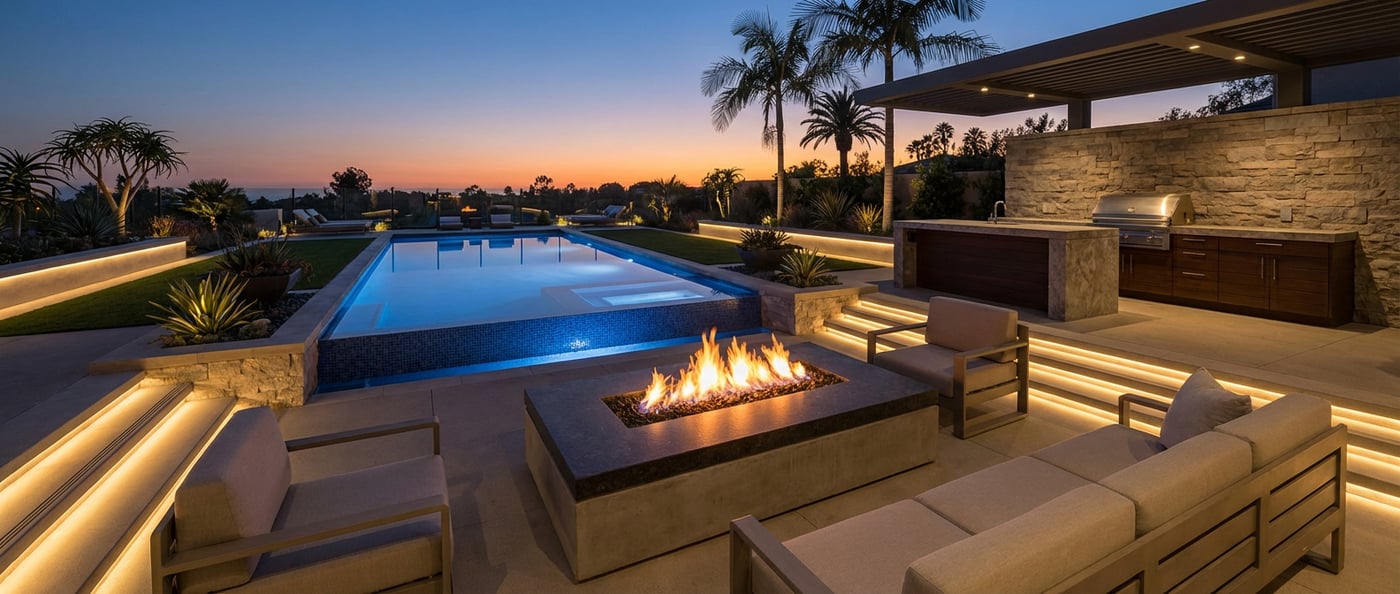
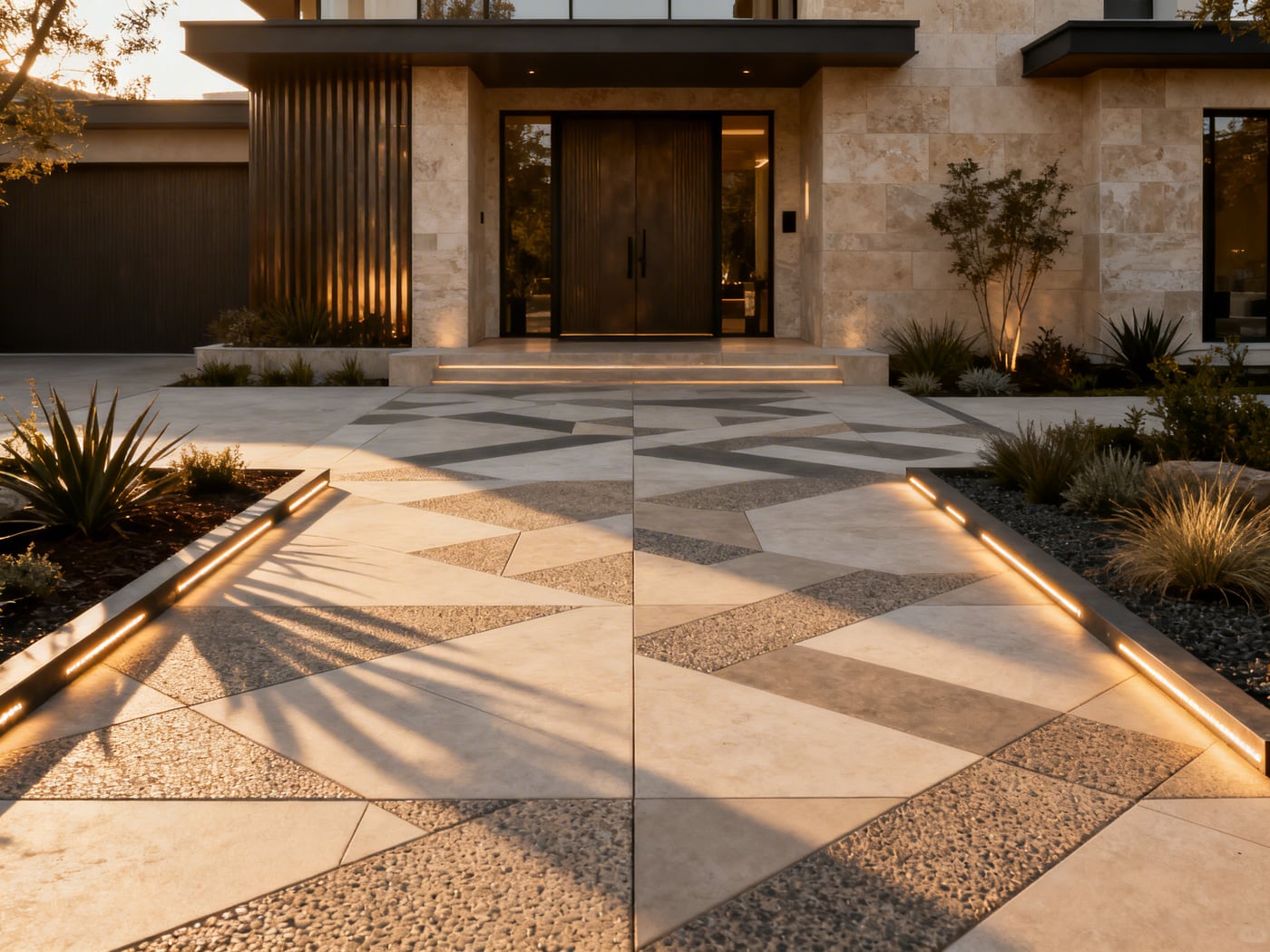
San Diego is one of the more demanding outdoor climates for patio materials. The combination of intense UV exposure, low humidity, coastal salt air in some neighborhoods, and the thermal cycling between cool nights and hot afternoons stresses materials in specific ways. A material that performs beautifully in a showroom may look dated, cracked, or stained after a few seasons of San Diego weather.
Here is an honest breakdown of the most common patio materials — what each one does well, where each one struggles, and what each one actually costs installed in San Diego.
Concrete Pavers
Overview: Precast concrete units in a wide range of sizes, shapes, colors, and textures. The most commonly specified patio material in San Diego residential construction at every price point.
What they do well: Individually replaceable if one unit cracks or stains — no full resurfacing needed. Porous joint sand allows minor movement without cracking. Wide material selection from commodity concrete pavers (Belgard, Techo-Bloc, Cambridge, EP Henry) to high-end European imports with more refined finish. Hold color reasonably well when sealed.
Where they struggle: Cheaper units fade with UV exposure over several years. Color variation between batches can be visible in a large installation or a repair. Without proper sealing and periodic resealing, some colors wash out. Joint sand can erode and require replenishment, especially in high-flow areas.
San Diego-specific performance: Excellent. The material handles thermal cycling well and is widely available through San Diego distributors, which keeps lead times manageable. At a quality level (Belgard Urbana, Techo-Bloc Raffinato, natural stone-look pavers), concrete pavers read as premium material.
Installed cost: $15–$35 per square foot installed, depending on paver quality, pattern complexity, and edge detail.
Natural Travertine
Overview: Sedimentary limestone formed in mineral springs, with a characteristic warm tone and natural pitting (the “holes” in travertine are authentic to the stone). One of the most popular high-end patio materials in San Diego’s coastal and transitional neighborhoods.
What it does well: Beautiful natural variation in color (cream, walnut, gold) that works well with San Diego’s warm palette and Mediterranean architecture. Stays cooler than concrete on hot days. Filled and honed finishes are very clean; tumbled finishes look intentionally aged. Natural stone has an intrinsic quality ceiling that manufactured materials do not.
Where it struggles: Requires sealing to prevent staining. Porous surface holds pool water chemicals if used around pools (specific pool-rated sealers are required). Some tiles crack at the natural voids under load if improperly installed. Price is significantly higher than concrete pavers.
San Diego-specific performance: Very good. Travertine is common in the high-end segments of La Jolla, Rancho Santa Fe, Del Mar, and Coronado — climates where the material has decades of track record. Tumbled travertine handles outdoor use well; polished travertine is better for covered areas.
Installed cost: $25–$60 per square foot installed, depending on tile size, finish (tumbled vs. honed), and pattern.
Natural Flagstone
Overview: Irregular natural stone — typically sandstone, slate, or quartzite — set in a mosaic pattern with either tight (mortar) joints or open (plantable) joints.
What it does well: Extremely natural, organic appearance that blends into planted landscapes. No two flagstone patios look the same. When set with wide joints and creeping thyme or other groundcover, the aesthetic is distinctive in a way that no manufactured material matches.
Where it struggles: The irregular surface is not ideal for dining tables, rolling furniture, or high-heel traffic. Requires skilled setting — flagstone that is not level and well-bedded rocks underfoot and cracks at the points. Maintenance of planted joints requires periodic weeding.
San Diego-specific performance: Good. Flagstone works best in shaded or partially shaded settings and in properties with a naturalistic, garden-oriented design language. Less common as a primary patio material in contemporary or modern projects.
Installed cost: $20–$50 per square foot installed, depending on stone species, joint treatment, and setting complexity.
Stamped Concrete
Overview: Poured concrete imprinted with patterns (cobblestone, slate, wood grain, ashlar) while wet, then colored with integral pigment or surface acid stain.
What it does well: Lower upfront cost than natural stone or premium pavers. Seamless installation for large areas. Can approximate the look of more expensive materials at a lower price point.
Where it struggles: This is where San Diego homeowners need honest information. Stamped concrete is a monolithic slab, which means any cracking becomes a crack through the entire surface rather than a joint between individual units. San Diego’s thermal cycling — significant temperature swings between seasons — produces cracking in concrete over time. Sealer fades and must be reapplied every two to three years. Resealing changes the surface sheen. Color fades from UV over time. The stamped texture is a surface impression, not the real material — and at some scale of proximity, it reads as an imitation.
San Diego-specific performance: Fair. Stamped concrete works well in covered areas with minimal direct sun and thermal cycling. In an exposed San Diego backyard, the maintenance and cracking issues appear more quickly than in milder climates. We install stamped concrete, but only in appropriate applications — we are honest when it is not the right choice for a given project.
Installed cost: $10–$22 per square foot installed.
Large-Format Porcelain Tile
Overview: Large-format (24”x24” to 48”x48”) porcelain tile, increasingly common in contemporary and transitional residential projects. Often used for an indoor-outdoor continuity look.
What it does well: Extremely low maintenance. Non-porous surface resists staining, does not require sealing, and holds color indefinitely. Modern large-format porcelain options are visually sophisticated, including accurate stone and wood plank looks. Very low water absorption — relevant for pool decks.
Where it struggles: Requires an exceptionally flat, well-prepared base — large tiles telegraph any variation in the subbase. Any significant settling or movement cracks tiles. Installation is more labor-intensive than pavers (cutting large tiles is slow; grout joints require precision). Tile that gets wet in sun is slippery; texture (grip/COF rating) must be specified for outdoor use.
San Diego-specific performance: Good to excellent when properly specified. The key variables are the COF (coefficient of friction) rating for wet outdoor use and the base preparation quality. A large-format porcelain patio installed on a poorly prepared base looks perfect on day one and cracked by year three.
Installed cost: $25–$55 per square foot installed, depending on tile size, base preparation requirements, and pattern complexity.
What We Recommend For San Diego
There is no universal best material — but there are patterns in what we recommend and why.
For high-traffic, high-sun patios: Concrete pavers (mid to high grade) or natural travertine. Both handle San Diego’s thermal cycling without cracking, both allow individual unit replacement if damage occurs, and both have decades of track record in this climate.
For pool decks: Natural travertine, cool-touch paver systems, or Kool Deck. Surface temperature matters enormously for pool areas. Travertine in particular stays cooler than dark or medium-toned concrete.
For contemporary or modern properties: Large-format porcelain, with proper base preparation and COF-rated tile for outdoor use.
For naturalistic or garden-oriented designs: Flagstone with planted joints, or tumbled travertine.
What we discourage in full-sun San Diego applications: Stamped concrete as a primary outdoor patio material — not because we cannot install it, but because the cracking and resealing cycle in a San Diego climate produces a maintenance commitment that most homeowners do not anticipate.
The Conversation to Have Before You Decide
Material selection should happen alongside the rest of the design — not before it. The right stone for a Coronado shingle-style house is different from the right stone for a Rancho Santa Fe contemporary. The right material for a pool deck is different from the right material for a covered outdoor kitchen.
If you want to talk through what makes sense for your property — thirty minutes, no cost, no pitch — that is how we start.
Related: Patios & Hardscape in San Diego · Pool Decks · Full Backyard Remodels · Projects in Coronado · Projects in Rancho Santa Fe · Belgard product library · Techo-Bloc design tools